Cow’s Milk for Toddlers: When to Start and How to Start
Transitioning from mothers breast milk to cow milk is a very big step. It marks the time your baby is growing into a busy toddler.
Even though it's an exciting phase, many parents, especially new parents who live alone have a lot of concerns, they have questions like when to start and how to do it properly. This guide will help you understand why cow milk is good for your toddler, and how to add it to their diet.
When Can My Baby Start?
The very short answer is wait until your baby turns 12 months old. Before 1 year your baby’s stomach is not ready to process cows milk. Cow milk is rich in protein and minerals that are hard to process by small developing internal organs.
Also it doesn't have enough iron content, which babies need a lot of for their growth. So before 1 year stick to breast milk or formula milk to make sure they get all the right nutrients. After 1 year you can start introducing cow milk as their main drink along with the solid food.
Why is Whole Milk Better?
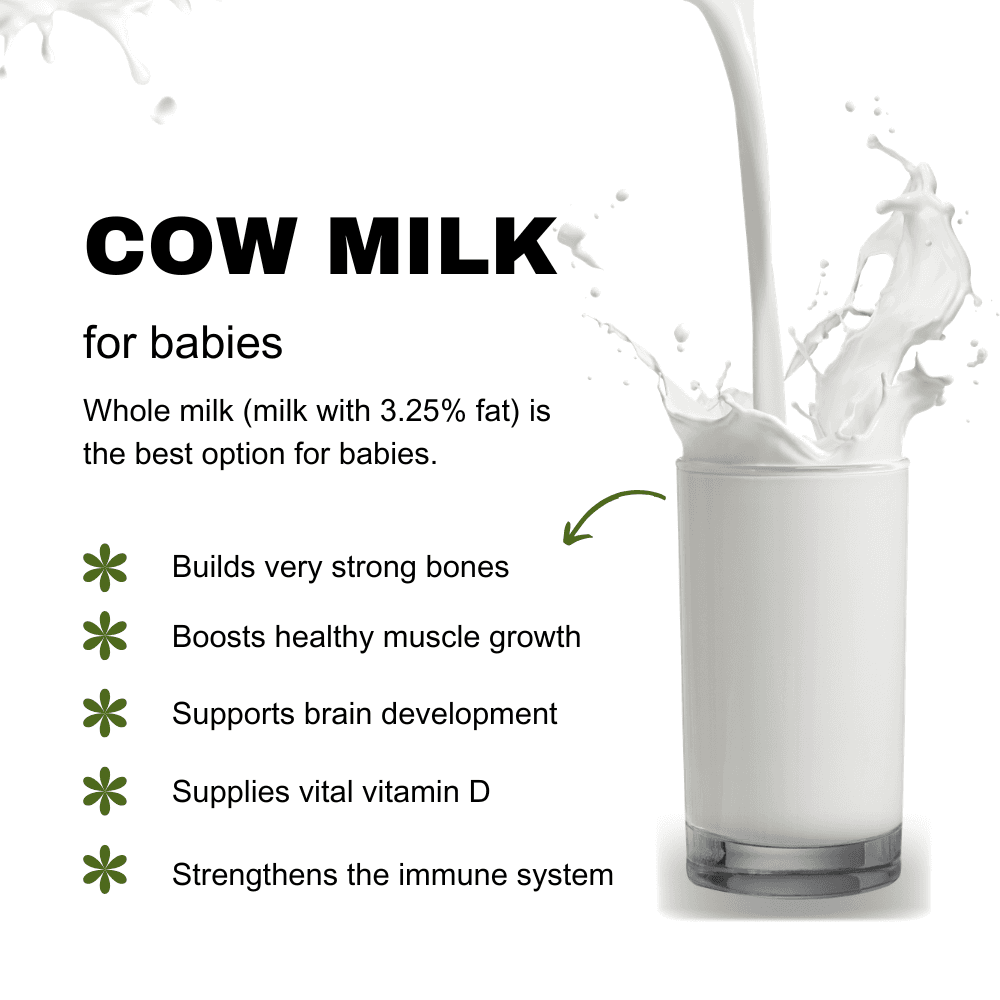
Between 1 and 2 babies are growing very fast, learning to walk and talk. Whole milk (milk with 3.25% fat) is the best option because the fat in the milk helps with brain development. Also excess fat in the milk provides the extra energy to babies which helps babies to stay active all day long.
After 2 or 3 years you can talk with a pediatrician about switching to low fat milk (1% or 2% fat milk), if they are consuming a proper balanced diet.
Nutrition Comparison
There are a lot of plant based milk options available but cow milk is a lot better then plant based milk. To show how cow milk is better we compared with other plant based alternatives.
| Nutrient (1 cup) | Whole Cow’s Milk | Soy Milk | Almond Milk |
|---|---|---|---|
| Protein | 8 grams | 7 grams | 1 gram |
| Fat | 8 grams | 4 grams | 2.5 grams |
| Calcium | ~300 mg | ~300 mg (fortified) | ~450 mg (fortified) |
| Vitamin D | 100 IU (fortified) | 100 IU (fortified) | 100 IU (fortified) |
If your baby is allergic to cow milk, you can choose plant based alternatives. In the plant based alternatives soy milk is the best choice, it has a nutrition very close to cows milk which is good for babies growth. Don't choose any kind of nut milk like almond or oat milk. They have very low nutrients and calories.
How to Start the Switch
If your baby doesn't like the taste of cow milk at first don't worry. This is very common among toddlers. Try these simple steps to safely introduce cow milk in their diet.
1. Mix it in
Start mixing a little cow milk with their regular breast milk or formula in their feeding bottle. Slowly increase the amount of cow milk in the mix, do this until it becomes completely cow milk.
2. Warm it up
Babies are used to drink warm milk from a bottle. Cold directly from the fridge might be scary and very new to them. Warming it to a lukewarm temperature can help.
3. Limit the amount
Don't give cow milk more than 2 to 3 cups (16 to 24 ounces) a day. If they drink too much milk during the day they might not eat their other healthy foods.
Things to Watch Out For
Iron Levels
Drinking too much milk leads to low iron content. This happens because it has no iron content and it fills up their small stomach. Make sure your toddler eats enough iron rich foods like meat, eggs, beans.
Allergies
When feeding cow milk for the first time, do a little test for stomach upset and allergies. Feed a small amount of milk for the first time and watch out for any red rash, a very upset stomach (diarrhea), or vomits, if they develop any of these symptoms call your doctor right away. They might have an allergic condition to milk.