Introducing Eggs to Babies in 2026: When, Why, and How to Start
Starting your baby with solid is one of the exciting parts and it's filled with a lot of questions. If you are a first time parent, you probably heard millions of things about the eggs. Some people say wait for one year, others say start at 4 or 6 months.
So what's actually true in 2026? The short answer is you can start feeding eggs to your baby as soon as they are ready for solid foods, which is usually around 6 months old.
In fact several new research studies show that waiting for too long you lose not of essential nutritions can be missed out. Let's dive into the details about when, why and how to give your baby their first egg.
The Big Question: When is the Right Time?
For a long time, doctors told parents to keep the eggs away from babies until their first birthday. They were scared of allergies, but science has changed its mind. The American Academy of Pediatrics (AAP) and the USDA's latest 2025-2030 guidelines now suggested that introducing allergenic foods early can actually prevent allergies which they might develop in older age.
Standard Timing
Doctors suggest 4 to 6 months if your baby is showing readiness signs like sitting up, head control, tongue reflex and curiosity.
The "Wait" Myth
Waiting up to 12 months is considered outdated and late. Studies like the LEAP trial showed that early exposure helps the immune system realize the egg protein is not an enemy (allergen).
Why Eggs are a "Superfood" for Tiny Humans
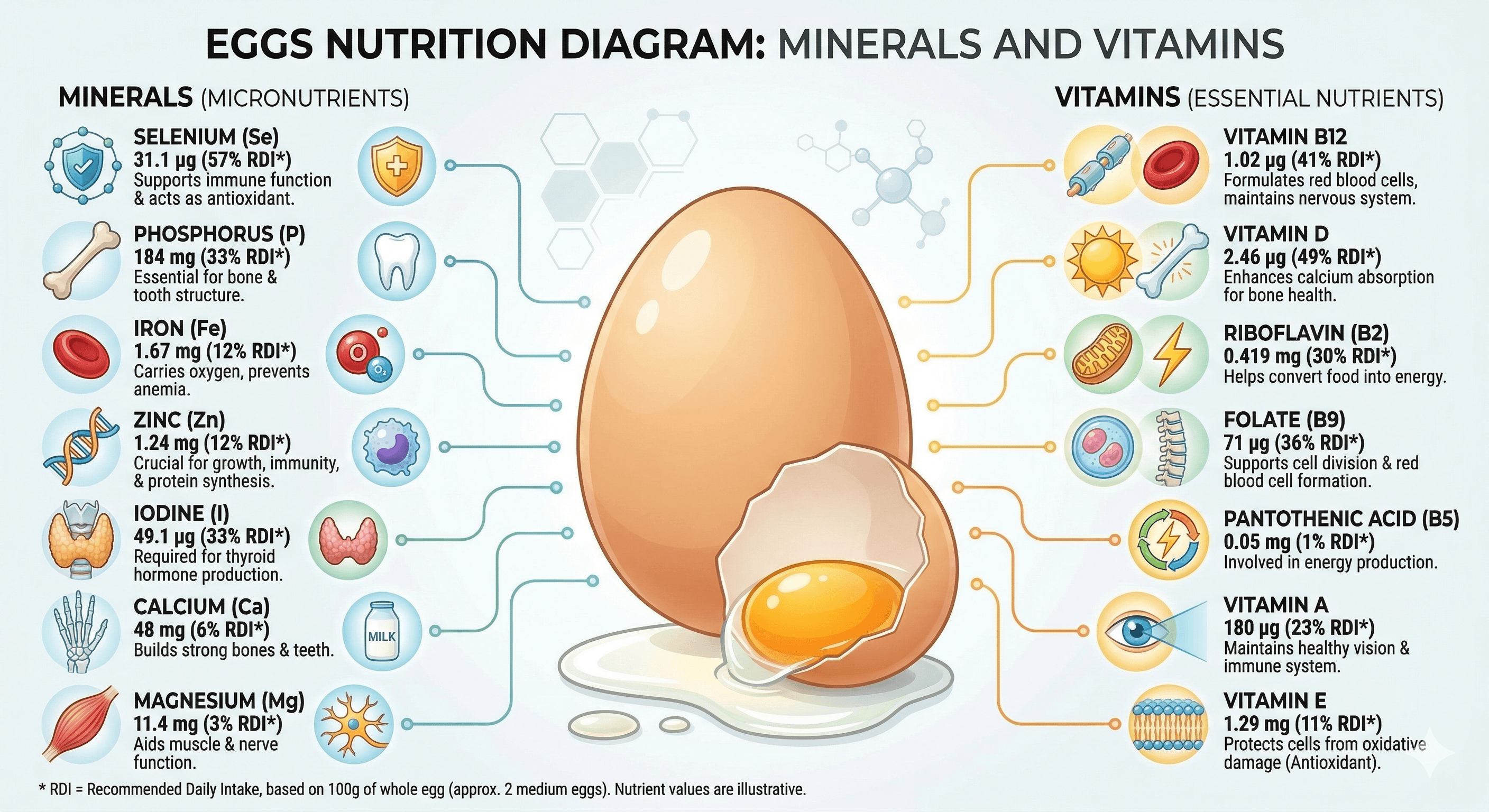
Eggs are not just easy to cook; they are packed with essential nutrition that babies need to grow their brain and body.
Choline (Brain Fuel)
Eggs are the great source of choline, which is an essential nutrition that helps to build the structure of the brain cells. Since a baby brain doubles its size in the first year, this helps the very early foundation for memory and learning.
Iron (Energy)
Babies natural iron storage drops around 6 months. They might be completely really on drops or solid foods. Egg is a rich source of iron, which helps revive the iron content.
Lutein (Eye Health)
Lutein is an antioxidant that occurs naturally. It is part of a group of substances called carotenoids. This antioxidant acts like a cover for your retina. It protects babies' sensitive eyes from blue light and helps babies improve their vision as they learn to see properly.
Protein (Muscle Growth)
Eggs are a great source of complete protein. Complete protein means protein with all nine essential amino acids. These are the building block for the muscles, which they need to crawl, roll, and eventually walk.
How to Introduce Eggs: A Step-by-Step Guide
You can't just give a 6 months old baby a boiled egg. You have to be very patient and strategic. One platform like reddit parents suggests a slow and steady approach.
The "Tiny Taste" Test
Start with a very small amount of egg, about the size of rice grain. Wait for 5 to 10 minutes to see if there is an immediate allergic reaction before giving more eggs.
Texture is Everything
For a 6 month old, the texture is everything. The texture needs to be very soft and squishable between your fingers. Mash a hardboiled egg with breast milk or formula until its smooth puree. If you are trying to feed the baby a scrambled egg, cook them at a low and slow temperature so they stay fluffy and moist, not rubbery.
For Cautious Parents
Boil or back egg in very high temperature. Science shows that high heat used in backing can modify protein structure, making it less likely to cause a reaction than a plain scrambled egg.
⚠️ Never add salt or honey
Never add salt or honey to a baby's egg. Babies cannot process salt and honey is also a big no no, until they are 1 year old due to bacterial infection risks.
Understanding and Managing Egg Allergy Risks
This is the most concerning thing for parents. About 2% of children have an egg allergy, but the good news is that most kids outgrow it by age 5.
What to look for?
For babies allergy symptoms usually show up within just 5 minutes, but sometimes take upto 2 to 3 hours. Look for:
- Hives, rashes, or swelling
- Vomit, diarrhea, or stomach pain
- Wheezing, coughing, or a "stuffy" nose
- Trouble breathing (Call Emergency)
If your baby has a known skin condition or already has a known peanut allergy, talk to your pediatrician before giving them eggs.
Real Parent Tips (The "Reddit" Wisdom)
The Morning Rule
Always introduce eggs in the early morning. If there is an allergic reaction you can easily access the doctor. Don't feed eggs after 3 or 4 PM.
Consistency is Key
Don't just give one egg and stop after that. If they are able to eat it, keep on including it in their diet at least 2 to 3 times a week to maintain the tolerance.
Mix it Up
If your baby hates the taste of the plain egg, try mixing mashed egg with avocado or sweet potato.
At a Glance: Egg Introduction
| Age | Best Format | Why? |
|---|---|---|
| 4–6 Months | Mashed with Milk | Easy to swallow; early allergen exposure. |
| 7–9 Months | Scrambled Strips | Helps with "pincer grasp" and chewing skills. |
| 10–12 Months | Egg Muffins | Great for self-feeding and exploring textures. |
| 1 Year+ | Any style (with Salt) | The digestive system is fully ready for family meals. |
Final Thoughts
Eggs are very cheap, easy to cook and an incredibly healthy way to start your baby's journey. Don't let the fear of allergies stop you, the latest research studies show that introducing eggs as early as possible is better.
Keep it very soft, squishy and keep your phone ready in case of any emergencies.