Apples for Infants: When Can Babies Eat Apples?

Raghunath Thilagar
Author
April 23, 2026 • 5 min read
There is just something magical about introducing your child to their first bite of solid food. However, it is not solely about the act of eating; it is also about witnessing your baby make their initial genuine discovery of food. Those big eyes staring at you. That little mouth opened in anticipation. That little reaction was filled with curiosity. And there’s no better food to introduce than a delicious old apple.
When Can Babies Start Eating Apples? (Signs Your Baby Is Ready)
Starting around 6 months, you'll notice a few signs. According to BabyCenter, your baby may watch you eat, grab at your food, or open their mouth when they see a spoon coming. These signs mean it's time to begin with solids—including apples!
However, fresh apples are too hard and crunchy for young infants. Safety is key, so we must prepare them properly.
Apple vs Other First Foods for Babies
| Food | Ease of Digestion | Allergy Risk | Preparation |
|---|---|---|---|
| Apple | Easy (when cooked) | Low | Needs steaming |
| Banana | Very easy | Very low | No cooking |
| Carrot | Moderate | Low | Needs cooking |
How to Prepare Apples Safely for Babies (Step-by-Step Guide)
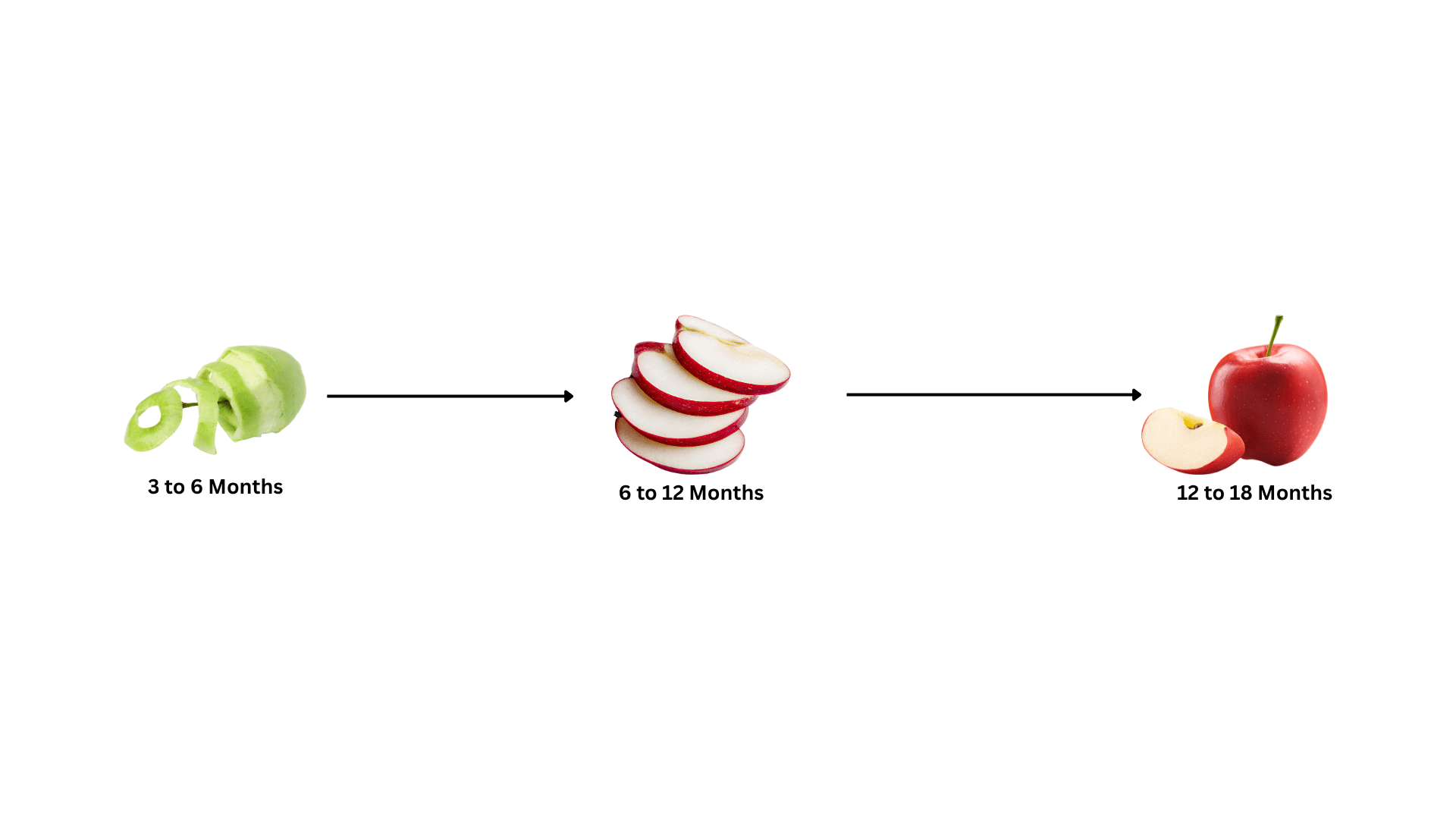
It sounds like a minor thing, but it is a crucial one. You peel the apple. You slice it into parts. You steam the apple slowly. And then those hard slices get softer and softer. And finally, you mush it all together and make a soft puree. And there it goes, your baby-friendly apple! That first bite? Not only is it delicious food, but it is also an unforgettable moment.
Are Apples Good for Babies? Nutrition and Health Benefits
Apples are a nutritional powerhouse. As detailed by What to Expect, they are naturally sweet, easy to digest, and packed with fiber and Vitamin C to support your baby's growing immune system.
| Nutrient | Benefit |
|---|---|
| Fiber | Supports digestion |
| Vitamin C | Boosts immunity |
| Natural sugars | Provides energy |
| Antioxidants | Supports overall health |
How Apple Texture Should Change as Your Baby Grows
The way you serve apples should evolve as your baby develops. Expert guidance from Solid Starts suggests transitioning from smooth purees to thicker mashes and eventually soft finger foods as your baby learns to pick up slices independently.
Are Apples Safe for Babies?
No, eating apples for kids needs supervision. Raw apples can wait. Your baby should be at least one-year-old when you introduce crunchy pieces of apple, but even then, supervision is required. No hurry, no anxiety, just patience.
Apple Recipes for Babies (6+ Months)
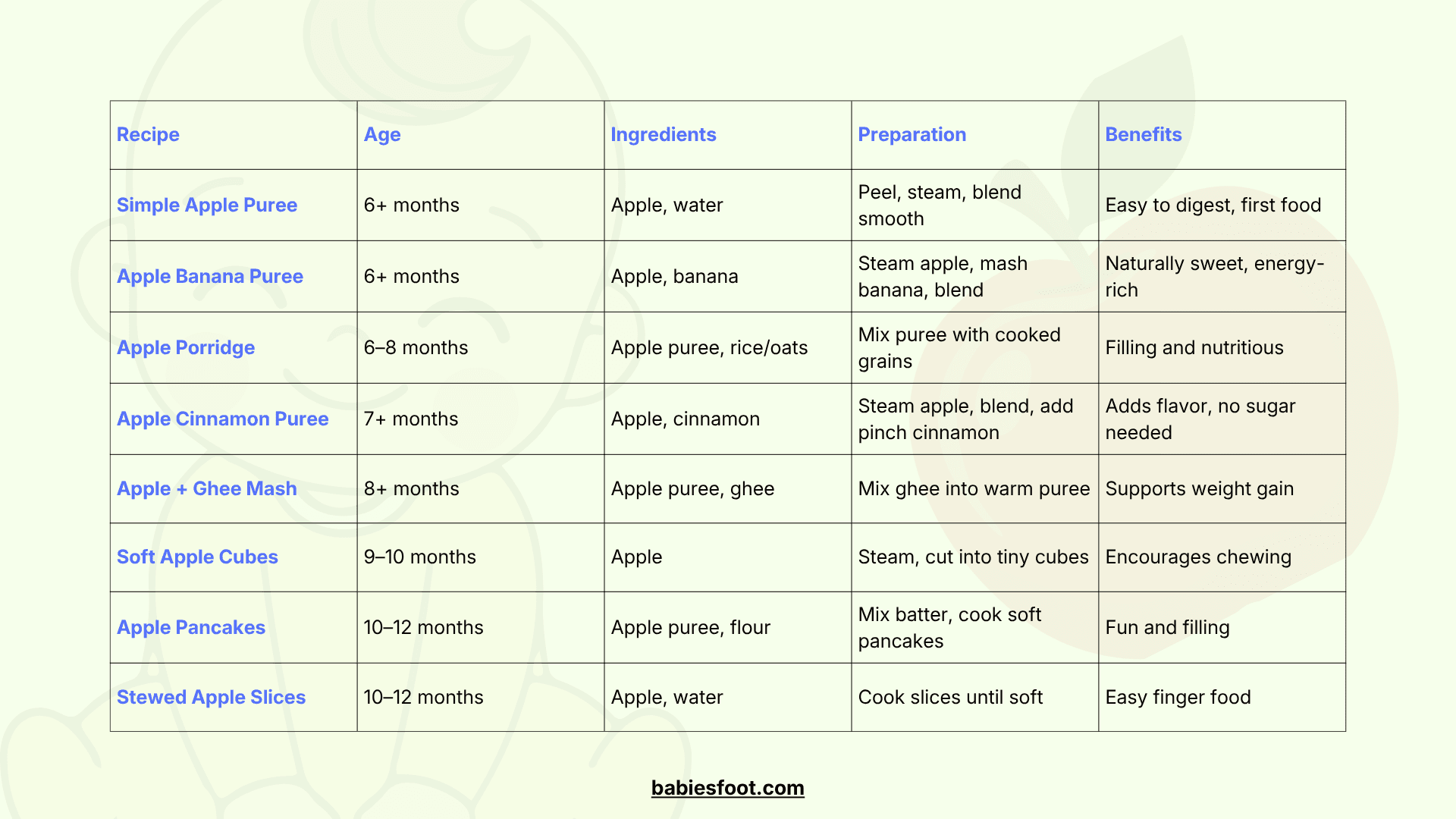
Apples might be simple, but that doesn’t mean they always need to be boring. Try to give them a bit of spice: blend some apple puree with banana for extra creaminess, add a touch of cinnamon for an aromatic kick, and combine with soft porridge for a warming experience. Or keep it simple, as it should be. Because in the end, your baby doesn’t care about any fancy recipes. They only want you.
Short Videos: Preparing Apples for Babies
Apple Preparation Tips
Quick serving ideas
How to Steam Apples
Step-by-step method
Baby-Led Weaning: Apples
Self-feeding techniques
Frequently Asked Questions
The Bottom Line: When and How to Give Apples to Your Baby
When can babies start eating apples? Starting from 6 months old, if they're soft and prepared properly. But while we're on the topic of ‘when,’ there's more to consider. More precious than anything else. And it's the ‘how’: The way you'll sit next to your baby. The way you smile at the baby tasting something new. The way you giggle at all those tiny messes they make. One day, your child will pick up a whole apple and scamper away to play. In that brief stillness, you will recall that very first bite. That inquisitive little face. That very first taste. Their first apple.