Sunlight for Newborn

Raghunath Thilagar
Author
April 23, 2026 • 5 min read

The sight of a newborn bathed in a soft beam of morning light is more than just a beautiful moment-it's a biological powerhouse. While it's crucial to protect babies from harsh direct sun, supervised, indirect sunlight is one of nature's most effective tools for a growing infant.
In 2026, we understand more than ever how light affects infant development. Here are the core benefits of sunlight for newborns, along with critical safety guidelines to ensure your baby stays protected while reaping these rewards.
Key Health Benefits of Sunlight for Newborns Explained
1. Natural Support for Jaundice
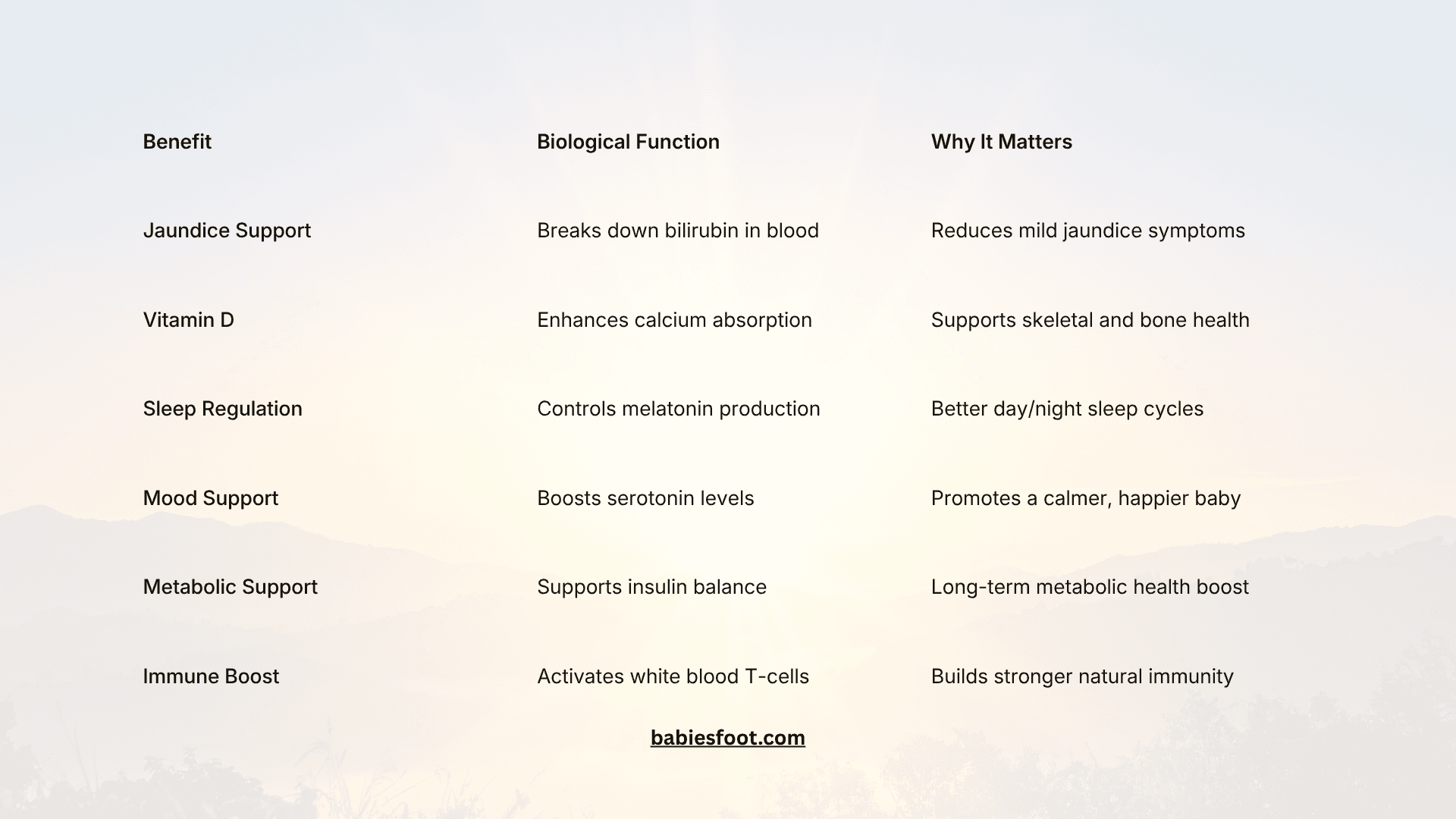
Many newborns develop neonatal jaundice due to high levels of bilirubin. Blue light waves found in natural sunlight help break down bilirubin into a form the baby's liver can process more easily. While severe cases require medical phototherapy, mild jaundice is often managed with supervised, indirect sunlight exposure.
2. The Vitamin D "Jumpstart"
Vitamin D is critical for calcium absorption and bone development. According to the American Academy of Pediatrics , while newborns shouldn't rely solely on the sun for Vitamin D (drops are usually recommended), sunlight helps synthesize it naturally, preventing conditions like rickets and ensuring strong skeletal growth.
3. Setting the Biological Clock
Newborns often have their days and nights mixed up because their internal clock isn't set. Early morning light triggers serotonin production during the day and melatonin at night, helping babies distinguish between 'wake time' and 'sleep time' more effectively.
4. Boosting the 'Happy Hormone'
Sunlight has a physiological effect on a baby's mood by increasing serotonin production. This helps regulate mood, digestion, and social bonding, often leading to a calmer and more content baby.
5. Strengthening the Immune System
Sunlight plays a vital role in energizing T-cells, the white blood cells responsible for immune defense. A modest amount of light exposure helps a newborn build a more resilient defense against environmental pathogens.
6. Enhanced Insulin Production
Recent research suggests that early exposure to sunlight may help regulate insulin levels in the long term. Supporting a healthy metabolic baseline from a young age can be a protective factor against metabolic issues later in life.
Safe Sunlight Exposure & Timing
The key to sunlight therapy is moderation. For newborns, indirect light is significantly safer than direct exposure.
By Age
| Age | Recommended Exposure |
|---|---|
| 0–3 months | Indirect sunlight only |
| 3–6 months | Very limited indirect light |
| 6+ months | Short direct exposure (with protection) |
The Best Time
| Time | Safety Level |
|---|---|
| Before 9 AM | Safe |
| 9 AM – 4 PM | Risky |
| After 4 PM | Moderate |
Signs of Overexposure
| Symptom | What It Means |
|---|---|
| Red or warm skin | Mild sunburn or heat stress |
| Fussiness | Overstimulation or discomfort |
| Dehydration | Significant fluid loss |
| Lethargy | Potential heat exhaustion |
Sunlight vs. Vitamin D Supplements
| Source | Reliability |
|---|---|
| Sunlight | Variable (depends on weather & exposure) |
| Supplements | Consistent & medically recommended |
Most pediatric organizations recommend a daily Vitamin D supplement of 400 IU for breastfed infants, as sunlight exposure can be inconsistent due to weather, skin type, and location.
Final Thoughts
Sunlight is a simple, cost-free foundation for your baby's health. By integrating safe, supervised sun time into your routine, you are providing a biological foundation from the cellular level. Sunlight exposure essentially does the heavy lifting for a baby's internal systems, supporting bone growth, jaundice recovery, and mood regulation. Remember: keep it indirect, keep it short, and always put safety first.
Frequently Asked Questions
Recommended Reading

The Essential Guide to Gentle Baby Skin, Hair, and Nail Care

The Science of Baby Massage: Benefits, Oils, and Techniques
Baby Wipes 101: Uses, Benefits, and Safety Tips for Parents
Dry Lips in Babies: Common Causes, Easy Home Remedies

Apples for Infants: When Can Babies Eat Apples?